Johnny Majors
The 1956 Heisman runner-up who came home from a national championship at Pittsburgh to rebuild his alma mater: three SEC titles, 116 wins, and the most dramatic exit in program history.
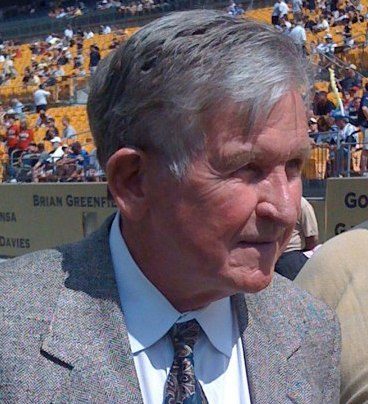
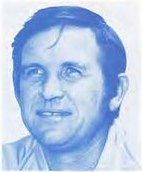
The Tailback
John Terrill Majors was born in Lynchburg, Tennessee, the oldest of five football-playing brothers, and his father Shirley coached him at Huntland High School, which won a state championship in 1951. At Tennessee he was a triple-threat tailback in the single-wing — two-time SEC Most Valuable Player, unanimous All-American in 1956, and runner-up for the Heisman Trophy to Notre Dame’s Paul Hornung, still the only winner from a team with a losing record. His No. 45 is retired. After one season in the Canadian Football League, he turned to coaching.
Pittsburgh’s Miracle
Majors assisted at Tennessee, Mississippi State and Arkansas, then took his first head coaching job at Iowa State in 1968 and led the Cyclones to the first bowl games in their history. At Pittsburgh from 1973, he recruited Tony Dorsett and built a power from nearly nothing: the 1976 Panthers went 12–0 and won the national championship, and Majors was named national coach of the year.
Coming Home
Days after that championship season, Majors came home. His plane landed in Knoxville on December 4, 1976, to crowds of admirers; he signed autographs, then raced a signing-day deadline through a three-day recruiting whirlwind in which, by his account, he ate two meals. The class he signed ended Tennessee’s five-year bowl drought by 1979. The build was slow — the first bowl win came in the 1981 Garden State Bowl — but by 1983 the Volunteers were winning nine games and beating Maryland in the Citrus Bowl.
The Championship Years
The 1985 team went 9–1–2, won the SEC and routed Miami 35–7 in the Sugar Bowl to finish No. 4. After a 5–6 relapse in 1988, the 1989 team produced the largest one-year turnaround in college football that season, going 11–1 and beating Arkansas in the Cotton Bowl; the 1990 team repeated as SEC champion and edged Virginia in the Sugar Bowl. Three SEC titles in six seasons — 1985, 1989, 1990 — made Majors, with 116 wins, the second-winningest coach in school history.
1992
The end came suddenly. Majors underwent heart surgery in the summer of 1992, and his longtime assistant Phillip Fulmer opened the season 3–0 as interim coach. The team went 2–3 after Majors returned, and during the closing weeks of the season the university forced his resignation — a palace intrigue, partisans on each side believed, involving Fulmer, the athletics board and athletic director Doug Dickey, Majors’s own old rival for the job’s power. Fulmer finished the season and kept the job. Majors returned to Pittsburgh for a second stint from 1993 to 1996 and retired from coaching. He died at his home in Knoxville on June 3, 2020; the campus street by the practice facility is Johnny Majors Drive.
Season by Season
| Season | Overall | Conference | Final AP | Bowl |
|---|---|---|---|---|
| 1977 | 4-7 | 1-5 | — | — |
| 1978 | 5-5-1 | 3-3 | — | — |
| 1979 | 7-5 | 3-3 | — | Bluebonnet Bowl (L) |
| 1980 | 5-6 | 3-3 | — | — |
| 1981 | 8-4 | 3-3 | — | Garden State Bowl (W) |
| 1982 | 6-5-1 | 3-2-1 | — | Peach Bowl (L) |
| 1983 | 9-3 | 4-2 | — | Citrus Bowl (W) |
| 1984 | 7-4-1 | 3-3 | — | Sun Bowl (L) |
| 1985 | 9-1-2 | 5-1 † | 4 | Sugar Bowl (W) |
| 1986 | 7-5 | 3-3 | — | Liberty Bowl (W) |
| 1987 | 10-2-1 | 4-1-1 | 14 | Peach Bowl (W) |
| 1988 | 5-6 | 3-4 | — | — |
| 1989 | 11-1 | 6-1 † | 5 | Cotton Bowl (W) |
| 1990 | 9-2-2 | 5-1-1 † | 8 | Sugar Bowl (W) |
| 1991 | 9-3 | 5-2 | 14 | Fiesta Bowl (L) |
| 1992 | 9-3 | 5-3 | 12 | Hall of Fame Bowl (W) |
| Career — 16 seasons | 116-62-8 | 57-40-3 | 7–4–0 |
† Conference champions.
Photographs: infamousjre, CC BY-SA 2.0, via Wikimedia Commons; Public domain, via Wikimedia Commons.