Robert R. Neyland
The General. A West Point engineer who fought in two world wars, built Tennessee into a national power three separate times, and left his name on the stadium.
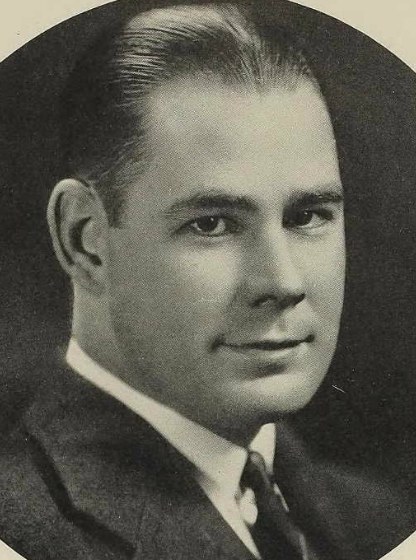
Robert Reese Neyland — pronounced “KNEE-land, like my knee,” as his wife Peg used to explain — coached Tennessee for 21 seasons across three decades and won 173 games, more than any coach in the program’s history. Twice the United States Army called him away from Knoxville to war, and twice he came back and rebuilt the Volunteers into champions. His defenses shut out the other team in 112 of his 216 games. Knute Rockne called him football’s greatest coach. Bear Bryant, who never beat him, was said to have muttered at his retirement banquet: “Thank God the old guy finally quit.”
Texas Roots
Neyland was born on February 17, 1892, in Greenville, Texas, the son of Robert R. Neyland Sr., an attorney. War was in the family long before it was in his life: his grandfather, a Confederate lieutenant colonel also named Robert Reese Neyland, was killed at Shiloh in 1862. After high school the younger Neyland passed a teaching certification test and worked as a substitute teacher at 17, earning $75 a month. He spent a year at Burleson College in Greenville and a year at Texas A&M, where he studied engineering and played baseball and football, before winning a competitive appointment to the United States Military Academy in 1912 — his congressman was Sam Rayburn, the future Speaker of the House.
West Point
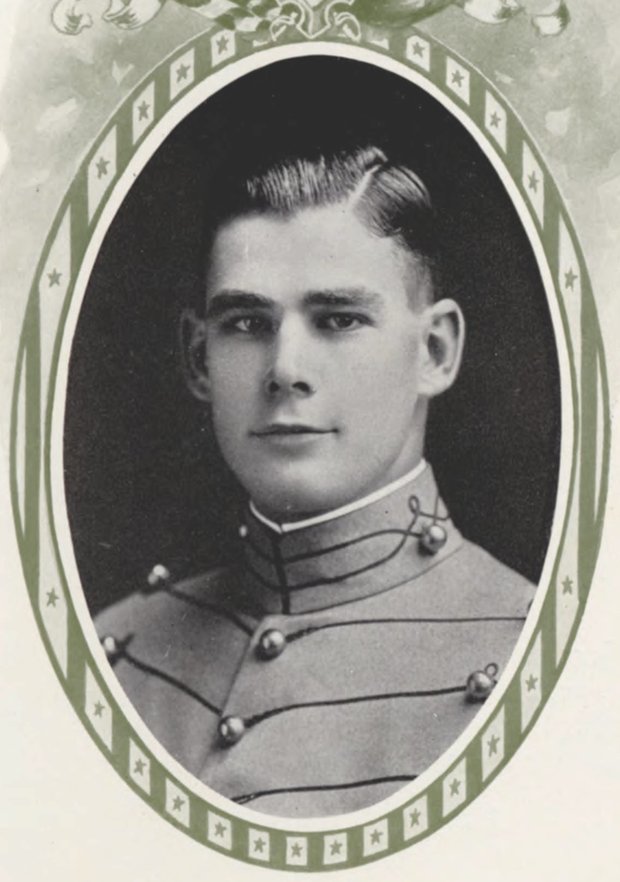
At West Point, Neyland was that rare cadet who was better at games than at everything else — and he was nearly best at everything else, graduating 28th in the class of 1916. On the football team he was the starting end on the undefeated 1914 Army team that won the national championship, playing alongside Dwight D. Eisenhower. On the baseball team, after beginning as a first baseman, he was moved to the pitcher’s mound when the staff ace was lost to injury, and proceeded to win 35 games against 5 losses — still the Army record — including 20 straight victories and the first no-hitter in school history, against Colgate in 1914. In the boxing ring he was the academy’s undefeated heavyweight champion three years running, 1914 through 1916. The New York Giants offered him a $3,500 contract to play professional baseball, and the Detroit Tigers and Philadelphia Athletics pursued him as well. He turned them all down and took his commission in the Corps of Engineers. Army inducted him into its Sports Hall of Fame in 2004.
The Soldier Between the Wars
Neyland’s first postings were an engineer’s postings: levee work and bridge and road construction on the Mexican border in the era of the pursuit of Pancho Villa, then service in France during the First World War. By 27 he was among the youngest regimental commanders in the Army; the newspaper publicity that distinction attracted cost him the rank, and the Army sent him to MIT for postgraduate engineering study in 1920-21 instead. In 1921 he returned to West Point as aide-de-camp to the superintendent, Brigadier General Douglas MacArthur, and assisted with the academy’s teams. The coaching itch, by his own later account, was already there: “I tried to get myself an ROTC job where I could do a little football coaching and experiment and see whether or not there was any sense to what I had dreamed up.”
The Army obliged in 1925, assigning Captain Neyland to the University of Tennessee as professor of military science and commandant of the ROTC. Even after football took over his life, the engineering never stopped: he served as assistant to the district engineer in Chattanooga and, in 1931, supervised dredging on the Tennessee and Cumberland Rivers and the preliminary surveys for Norris Dam. On September 20, 1926 — the same week he coached his first college game — the Army promoted him to major.
“Even the Score with Vanderbilt”
Neyland came to Knoxville as an assistant coach under M. B. Banks, at a starting salary of $750, recommended by his old Texas A&M coach Charley Moran. In 1925 he filled in for the ailing Banks for one game and beat Georgia 12-7 in Knoxville, in what was called the biggest upset of the year in the South. Banks departed that December, and Nathan Dougherty, the dean who chaired the athletic council, promoted Neyland with a single charge: even the score with Vanderbilt. The Commodores then led the series 17-2-2. Neyland’s first game as head coach was a 13-0 win over Carson-Newman on September 25, 1926. He would lose to Vanderbilt only three times in 21 meetings. He and Ada “Peg” Neyland, married in 1923, raised two sons in Knoxville, Robert Jr. and Lewis.
The First Reign, 1926–1934
The first Neyland teams were nearly unbeatable: 76-7-5 across nine seasons, with Southern Conference championships in 1927 and 1932 and a six-year stretch, 1927-32, in which Tennessee went 53-1-5. His first seven teams lost two games total. The era announced itself on October 20, 1928, when the Alabama series — dormant since 1907 — resumed by agreement between Neyland and Wallace Wade, and Gene McEver returned the opening kickoff 98 yards to beat Alabama 15-13. Neyland called McEver “the best player I ever coached — the best I ever saw.” Against Alabama he would finish 12-5-2, and he measured every player by the fixture: “You never can really tell about a football player until after he’s played against Alabama.”
Losing, in those years, was an event. Tennessee put together unbeaten streaks of 33, 28, 23, 19 and 14 games under Neyland; the 33-game run, still the longest in school history, survived from 1927 until Alabama ended it 18-6 in 1930. Six of his teams finished undefeated, and nine went through the regular season without a defeat.
The engineer’s mind showed in the details. Neyland is credited as the first coach to study opponents on game film and the first to use sideline telephones and press-box spotters; his teams were among the first in lightweight pads, low-top shoes and tearaway jerseys, and he devised a canvas tarp to protect the field. In 1934 the Army ordered him to the Panama Canal Zone. Assistant W. H. Britton coached the 1935 team to a 4-5 record — the only losing season Tennessee would have between 1926 and 1952 — and in 1936 Neyland retired from the Army and came home, taking the athletic director’s job as well as the coach’s.
The Second Reign, 1936–1940
The second reign was the summit. Tennessee went 43-7-3 in five seasons and won the SEC in 1938, 1939 and 1940. The 1938 team finished 11-0, outscored its opponents 293-16 with eight shutouts, and closed the season by beating Oklahoma 17-0 in the Orange Bowl; the university claims the national championship on the strength of five selectors. The 1939 team then did something no major team has done since: it played the entire regular season without allowing a point, outscoring ten opponents 212-0. From November 1938 into December 1939 the Volunteers ran off 17 consecutive shutouts and 71 consecutive scoreless quarters, both still NCAA records. Only in the Rose Bowl did the streak meet its end, USC winning 14-0. The 1940 team repeated as SEC champion and claimed a second national title before losing the Sugar Bowl to Boston College, 19-13. Bowden Wyatt captained the 1938 champions; George Cafego, Bob Suffridge and Ed Molinski starred across the run.
The Second World War
In May 1941, months before Pearl Harbor, the Army recalled Neyland to active duty. He served as district engineer at Norfolk and then Dallas, rising to colonel, and in the fall of 1942 coached the Eastern All-Army all-star team, which beat the New York Giants and the Brooklyn Dodgers, lost to the champion Chicago Bears, and helped raise $241,392.29 for Army Emergency Relief. Then came the China-Burma-India theater: Kunming, and finally Calcutta, where as port commander he supervised the movement of supplies through monsoons and over the Himalayas — the Hump — to the armies in China. On November 10, 1944, he was promoted to brigadier general. He came home with the Distinguished Service Medal, the Legion of Merit, the Order of the British Empire and China’s Order of the Cloud and Banner.
In Knoxville, his former guard and line coach John Barnhill kept the program at its altitude: 32-5-2 across the war years, a Sugar Bowl win and a Rose Bowl trip, with no team fielded at all in 1943. Neyland retired from the Army a second time in 1946, a brigadier general, and resumed both of his jobs.
The Last Reign, 1946–1952
The third team he built won at once: the 1946 Volunteers shared the SEC championship before losing the Orange Bowl to Rice. Then came the only lean years of his career, 5-5 in 1947 and 4-4-2 in 1948, while he restocked. The payoff arrived in 1950 and 1951. The 1950 team finished 11-1, beat Texas 20-14 in the Cotton Bowl behind tailback Hank Lauricella — whose 75-yard run set up the winning score — and claimed the national championship; along the way it beat Bear Bryant’s Kentucky 7-0 in the snow in Knoxville. The 1951 team went 10-0 through the regular season and finished ranked No. 1 in both the AP and the coaches polls — the first Tennessee team ever to end a season ranked first — before Maryland beat it in the Sugar Bowl. In seven meetings Bryant never beat him: 5-0-2, with Kentucky held scoreless in five of the seven. The last teams were stocked like the first ones: Lauricella ran the single wing, and on the line stood Doug Atkins, the future Hall of Fame end who anchored the 1950-52 defenses. Neyland’s final team went 8-2-1 in 1952 and lost the Cotton Bowl to Texas, 16-0, on January 1, 1953 — his last game. Health forced the decision. At the testimonial dinner held for him that August, he closed with MacArthur’s words: “There on the fields of friendly strife are sown the seeds which on other days will yield the fruits of victory.”
Season by Season
| Season | Overall | Conference | Final AP | Bowl |
|---|---|---|---|---|
| 1926 | 8-1 | 5-1-0 | — | — |
| 1927 | 8-0-1 | 5-0-1 † | — | — |
| 1928 | 9-0-1 | 6-0-1 | — | — |
| 1929 | 9-0-1 | 6-0-1 | — | — |
| 1930 | 9-1 | 6-1-0 | — | — |
| 1931 | 9-0-1 | 6-0-1 | — | — |
| 1932 | 9-0-1 | 7-0-1 † | — | — |
| 1933 | 7-3 | 5-2 | — | — |
| 1934 | 8-2 | 5-1 | — | — |
| 1936 | 6-2-2 | 3-1-2 | 17 | — |
| 1937 | 6-3-1 | 4-3 | — | — |
| 1938 National Champions | 11-0 | 7-0 † | 2 | Orange Bowl (W) |
| 1939 | 10-1 | 6-0 † | 2 | Rose Bowl (L) |
| 1940 National Champions | 10-1 | 5-0 † | 4 | Sugar Bowl (L) |
| 1946 | 9-2 | 5-0 † | 7 | Orange Bowl (L) |
| 1947 | 5-5 | 2-3 | — | — |
| 1948 | 4-4-2 | 2-3-1 | — | — |
| 1949 | 7-2-1 | 4-1-1 | 17 | — |
| 1950 National Champions | 11-1 | 4-1 | 4 | Cotton Bowl (W) |
| 1951 National Champions | 10-1 | 5-0 † | 1 | Sugar Bowl (L) |
| 1952 | 8-2-1 | 5-0-1 | 8 | Cotton Bowl (L) |
| Career — 21 seasons | 173-31-12 | 103-17-10 | Bowls 2-5 |
† Conference champions. Tennessee claims national championships for 1938, 1940, 1950 and 1951; the 1951 team finished No. 1 in both final polls. Neyland missed the 1935 season on Army duty in Panama (W. H. Britton coached) and the 1941–1945 seasons in the Second World War (John Barnhill coached).
The Seven Maxims
Neyland distilled the 38 maxims he had compiled — inspired in part by his West Point coach Charles Daly’s 1921 book on the game — down to seven, and they remain the program’s creed, recited by Tennessee teams in the locker room before every game to this day. They are the coach in miniature: mistake-free football, the kicking game, and relentless pressure. “Almost all close games,” he said, “are lost by the losers, not won by the winners.”
- The team that makes the fewest mistakes will win.
- Play for and make the breaks, and when one comes your way — SCORE.
- If at first the game — or breaks — go against you, don’t let up ... put on more steam.
- Protect our kickers, our quarterback, our lead and our ball game.
- Ball, oskie, cover, block, cut and slice, pursue and gang tackle ... for this is the WINNING EDGE.
- Press the kicking game. Here is where the breaks are made.
- Carry the fight to our opponent and keep it there for 60 minutes.
The Legacy
Neyland remained athletic director until his death, and in that chair he shaped the building that now bears his name: the engineer drew the expansion plans that guided the stadium’s growth from 3,200 seats when he arrived past 100,000. In February 1962 the university trustees voted to rename Shields-Watkins Field for him; he learned of it on his final birthday. He died of liver cancer at Ochsner Foundation Hospital in New Orleans on March 28, 1962, and is buried in Knoxville National Cemetery. Neyland Stadium was dedicated on October 20, 1962, at the Alabama game; the field below the name still carries the older one, Shields-Watkins.
The honors accumulated while he lived and after: the College Football Hall of Fame in 1956, the Amos Alonzo Stagg Award in 1957, SEC Coach of the Year four times, and the chairmanship of the NCAA football rules committee until his death. In a 1969 poll of experts he was named the second-greatest coach of all time, behind only Knute Rockne — who had called him the greatest. Wallace Wade, who coached against him at Alabama and Duke, delivered the profession’s verdict: “He could take his and beat yours, or take yours and beat his.” His players carried the system across the country — at one point more than 175 of them were working as head coaches in the United States and Canada, among them Bobby Dodd, Bowden Wyatt and Murray Warmath — and 21 of them were first-team All-Americans, 11 reaching the College Football Hall of Fame. Dodd, a Grantland Rice All-American who went 27-1-2 in games he started for Neyland, coached Georgia Tech to a national championship of its own; Wyatt, the captain of 1938, eventually held Neyland’s old job in Knoxville; Warmath won a national title at Minnesota. The Knoxville Quarterback Club has presented the Robert R. Neyland Trophy since 1967, its first honorees his own men — Herman Hickman, Bobby Dodd and John Barnhill; the university created a scholarship in his name for non-athletes the year after his death; and since 2010 a twice-life-size bronze Neyland has knelt outside the stadium, watching the crowds file in. Lindsey Nelson, the broadcaster who got his start in Knoxville, closed his memoir with the General: “I think of all of that, and I always smile. And sometimes, when no one’s looking, I salute.” Tennessee still plays in the building he designed, under the maxims he wrote, by the standard he set: 173 wins, 31 defeats, and a .829 winning percentage that, when he retired, stood first among major-college coaches with twenty years in the game.